Have you ever found yourself frantically scribbling down notes in class, only to miss the one sentence your teacher says will definitely be on the test?
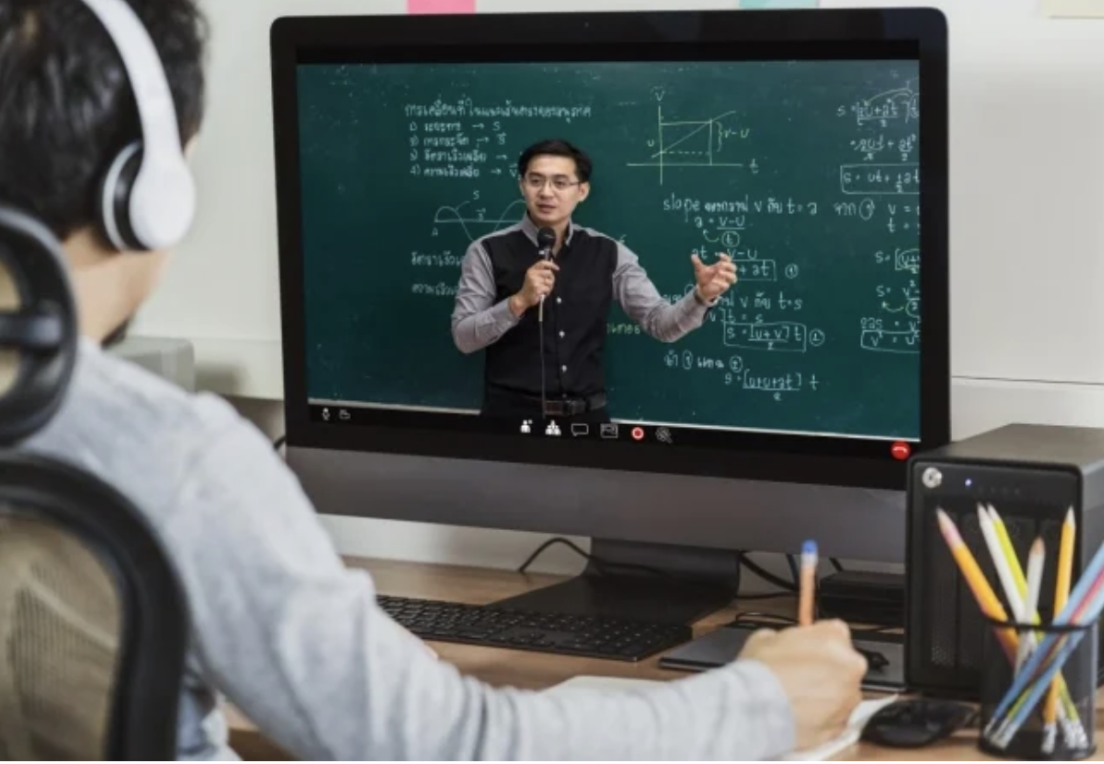
For decades, students have relied on hurried note taking as their primary way of capturing information during lectures. However, these rushed notes are often inaccurate. According to The University of Michigan, “Inaccuracies in student notes occur most frequently when students are copying diagrams, numerical figures, equations, and items on transparencies-much of which is essential material.” It is precisely this kind of “essential material” that will be on an exam. To solve this issue, schools across the country should adopt recorded lectures as a standard academic tool. To start on a smaller scale, St. Luke’s should lead the way by implementing this practice. With a simple camera setup, teachers can record themselves and the whiteboard while they teach. Meanwhile, students would take notes and participate in class out of the camera’s view. These recordings would be placed in Blackbaud so students have the ability to revisit material whenever necessary. By giving students access to recorded lectures, students’ comprehension skills would strengthen, reduce their stress, and support long term academic success.
St. Luke’s should implement this tool because teaching and taking notes under the time constraints of a class period is a stressful process. Teachers are required to cover a significant amount of material in a limited amount of time which causes lessons to move too quickly. Unfortunately, students struggle to keep pace in this environment, and attempt to capture everything the teacher is saying and all the information on the whiteboard. According to The Association for Psychological Science explains, this “verbatim note taking… appears to come at the cost of deeper processing.” Recorded lectures would give students the opportunity to watch the lecture at their own pace, pause the video when needed, and replay certain parts of the lecture that were complex.
It is also important to consider how quickly students forget information after they leave the classroom. According to Indegene,“…within 1 hour, learners forget an average of 50% of the information presented; within 24 hours, they forget an average of 70% of new information; and within a week, they forget up to 90% of what they “learned.” In AP or Advanced classes, teachers stay on a strict teaching schedule to cover all material. This means that information covered in class will rarely be revisited. With a lecture recording to review, students do not have to rely on their fading memory of a lesson to supplement missing pieces in their notes.
Additionally, students who are absent or arrive late can access the same instruction as their peers via recorded lecture. This means that absent students do not have to rely on their peers’ incomplete notes and secondhand explanations. These recordings can also serve as study material before an exam, and teachers can revisit past explanations, refine their instruction, or even share selected recordings with future classes.
Although recorded lectures have proven to be beneficial to students and teachers, it is important to acknowledge the concerns that come with implementing them. A common concern among teachers is that student attendance will decrease if a recording is provided. Luckily, Chapter 168 of The General Statutes of Connecticut “requires children ages 5–18 to attend school, with mandatory attendance ending upon graduation.” Moreover, it is important to recognize that lecture recordings do not inherently discourage attendance, they enhance learning for students who are already engaged. According to the University of Colorado Boulder, “The final grade average for viewers was 4.7% higher than non‑viewers (92.3% vs. 87.6%), and attendance averages for students who viewed lecture recordings were 10% higher (84.0% vs. 74.0%).” Furthermore, students who skip class will miss opportunities that the video cannot replicate. For example, students cannot ask the teacher questions, participate in classroom discussions, or complete hands-on activities like science labs.
Another concern among the St. Luke’s community involves privacy and consent while recording lectures. According to Dr. Bludgus, the St. Luke’s Head of the Upper School, “If a recording captures student voices, images, or identifiable information, sharing these recordings could violate federal law if the student’s legal guardian does not consent.” According to Allen Harris Law, Connecticut is a “one-party consent state”, meaning that “…only one person involved in the conversation needs to consent to the recording…This includes both students recording professors and professors recording students.” Luckily, private institutions like St. Luke’s have the flexibility to decide what can and cannot be recorded in a classroom. For example, Princeton University prohibited the recordings of conversations “occurring in an educational, residential, research or workplace setting” without the consent of all parties”. While these concerns are valid, they do not prevent St. Luke’s from implementing a balanced policy. St. Luke’s can choose to only record lectures, where the teacher and the whiteboard are the focus, and exclude activities that require immense student participation.
A final concern of recorded lectures among teachers and administrators is that the recordings could be edited, misused, taken out of context, or posted online. Fortunately, The Family Educational Rights and Privacy Act (FERPA) protects teacher educational records from unauthorized disclosure. However, it is also important to consider that these recording lectures can also serve as a form of protection for teachers. A complete and time-stamped video provides objective evidence of what actually occurred in class. If a student were to edit a recording in a misleading way, the original file should be accessible to school administrators too. Any intentional misuse of the recordings would fall under the St, Luke’s Honor Council, just like any other violation involving dishonesty or harm to the St. Luke’s community. For this reason, recorded lectures strengthen accountability rather than undermine it.
All schools have the responsibility to adapt to the ways students learn most effectively. Research shows that one of the simplest and most impactful ways to do this is by providing recorded lectures for students to access whenever they need support. St. Luke’s can continue to uphold this responsibility by incorporating this tool for the students enrolled in each class, giving them a reliable resource that strengthens their understanding, and supports long-term learning. Additionally, recorded lectures help students to keep up with fast paced classes, reinforce material that is easily forgotten and supply absent students with accurate class information. So, the next time you find yourself frantically scribbling down notes and miss the one sentence that the teacher says will be on the test, remember to urge St. Luke’s to provide recorded lectures for all of its dedicated students.